
How to keep context from getting lost in AI-generated data work
 Allan WillePublished 2026-07-10
Summary: AI analytics tools generate SQL, dashboards, and reports quickly, but they struggle to retain the business context behind those outputs. When metric definitions live in wikis or prompts rather than machine-readable systems, every new AI session starts without the shared understanding your teams depend on. This post explains why documentation alone fails, what durable context actually looks like, and how organizations can build the metric governance infrastructure that makes AI-generated analysis trustworthy and consistent across teams and time.
AI can write SQL in seconds. It can generate a dashboard, summarize a dataset, and answer follow-up questions faster than any analyst. But here's a question worth sitting with: does the AI actually know what your business means by "revenue"?
Not the column name. Not the table. The meaning — the agreed-upon definition your finance team, your sales team, and your CEO would all nod at if you put it in front of them.
That gap between fast output and trusted meaning is where AI-generated data work quietly breaks down. And as more organizations lean on AI for analytics, the problem compounds. Context gets generated, used once, and then lost — buried in a chat session, forgotten in a notebook, or silently overridden the next time someone asks a slightly different question.
This post is about why that happens, why it matters more than most people realize, and what you can actually do about it.
Why AI loses context so easily
AI analytics tools are impressive at generation. They are much weaker at retention.
When you ask an AI assistant to write a query or build a report, it works from whatever context exists in that moment: your prompt, the schema it can see, and any instructions you've included. The moment that session ends, the context evaporates. The next query starts fresh.
That's a fundamental design constraint, not a bug. But it has real consequences for organizations trying to use AI consistently across teams and time.
Consider a few common scenarios:
Two analysts ask the same question on different days. The AI produces two slightly different queries because the prompts were worded differently. Both look correct. Neither flags the discrepancy.
A metric definition changes. The AI has no way to know unless someone explicitly updates the context it draws from. Old queries keep running with the old logic.
A new team member uses the AI tool. They get answers based on whatever the AI infers from the schema, not the definition the business actually agreed on.
The outputs look authoritative. The reasoning behind them is invisible.
The real problem isn't the SQL
Most conversations about AI in analytics focus on accuracy: did the AI write the right query? That's a reasonable concern, but it's actually the easier problem to solve. You can review SQL. You can test it against known results.
The harder problem is semantic consistency: does the AI understand what your business context means by the terms it's using?
"Revenue" sounds obvious until you realize one team counts it at contract signature, another at invoice, and a third at cash receipt. "Active user" means something different in product than it does in customer success. "Customer" might include trials, or it might not, depending on who you ask.
These aren't edge cases. They're the everyday reality of how businesses talk about their own data. And when AI generates analyses without access to those agreed-upon definitions, it fills the gaps with inference. Sometimes that inference is right. Often enough, it isn't — and no one catches it until a number shows up in a board meeting that no one can explain.
Documentation isn't enough
The instinct when context gets lost is to write it down. Create a data dictionary. Add comments to the schema. Maintain a wiki page with metric definitions.
Documentation is better than nothing. But it has a critical limitation: it's written for humans, not for AI.
An AI assistant querying your database doesn't read your Confluence page before it writes SQL. It doesn't check the wiki to confirm whether "churn" means logo churn or revenue churn before it generates a chart. Documentation that lives outside the data itself is context that AI can't use.
For context to be durable — to survive across sessions, teams, tools, and time — it needs to be machine-readable and attached to the data. That's a different kind of infrastructure than most organizations have built.


What durable context actually looks like
The organizations getting this right aren't just documenting their metrics. They're encoding them.
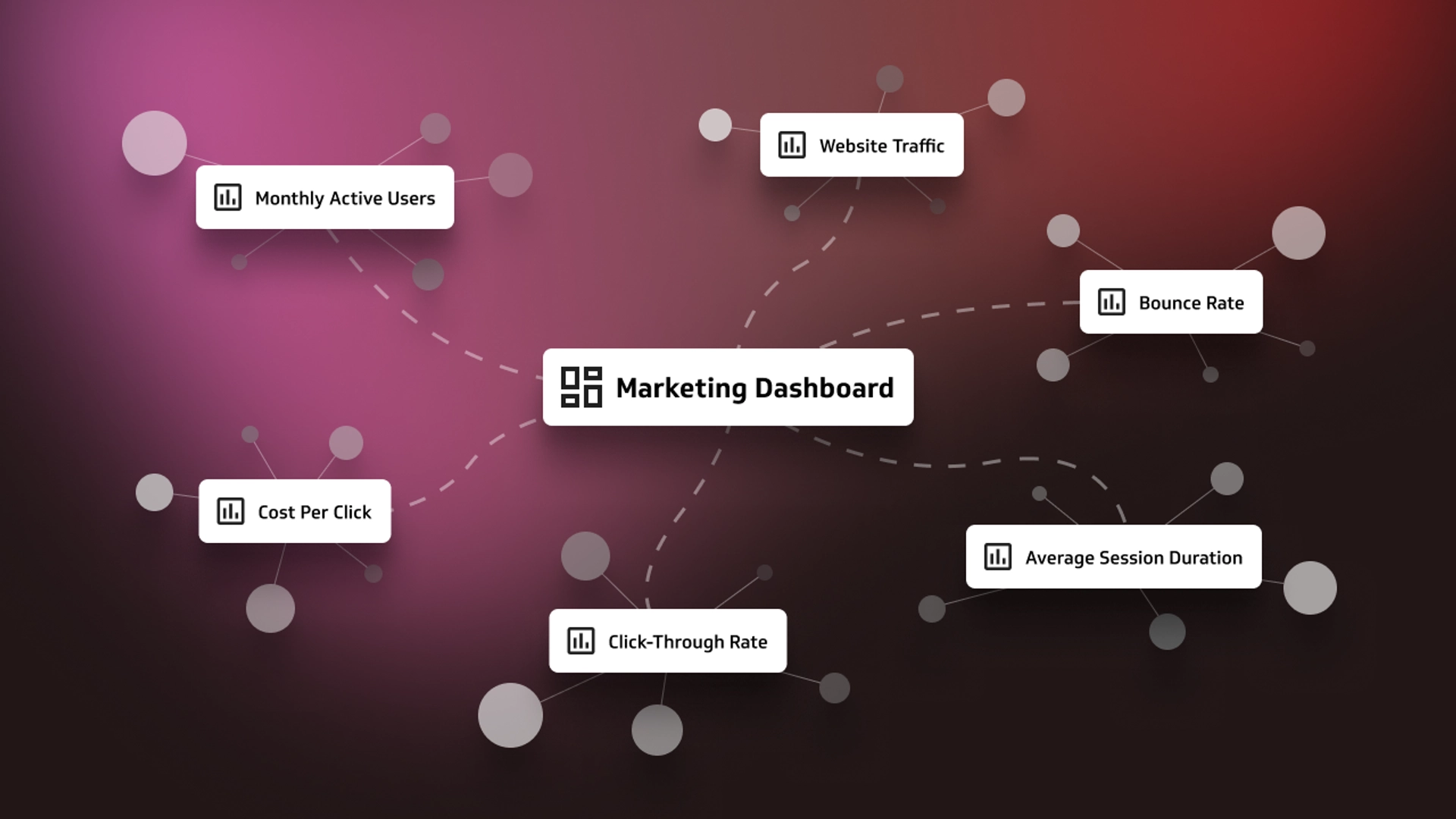
That means moving metric definitions out of wikis and into systems that AI can actually query: semantic layers, metric catalogs, knowledge graphs, and metadata frameworks that sit between your raw data and the tools consuming it.
When a metric like Net Revenue Retention is defined in a governed metric catalog — with its formula, its data sources, its certification status, and its business owner — every tool that connects to that catalog gets the same answer. The AI assistant, the dashboard, the ad hoc query, the exported report. Consistent, every time.
A few principles that distinguish durable context from documentation:
Definitions are executable, not descriptive. The metric isn't just explained; it's encoded as logic that runs against your data.
Context travels with the metric. Descriptions, assumptions, lineage, and ownership are attached to the definition itself, not stored separately.
Certification signals trust. A governed metric carries a signal — this definition has been reviewed, approved, and is the one the business uses.
AI can read it. The context is structured and accessible through APIs or model context protocols, not locked in a document.
This is the difference between telling your AI what revenue means once in a prompt, and building a system where your AI always knows what revenue means.
The shift happening in analytics right now
For years, the hard part of analytics was getting data out. Writing queries, building pipelines, creating visualizations — these were technical bottlenecks that required specialized skills.
AI is dismantling those bottlenecks fast. The generation problem is largely solved. Anyone with access to an AI analytics tool can get a chart or a query in minutes.
That shifts the real challenge upstream. The differentiator is no longer who can generate outputs fastest. It's whose outputs can be trusted.
Organizations with well-governed metrics, rich metadata, and consistent data governance will produce AI-generated analyses that hold up under scrutiny. Organizations relying on prompts and documentation will produce analyses that look right until someone asks a hard question.
This is a strategic inflection point, not a technical footnote. The companies investing in metric governance now are building an advantage that compounds as AI becomes a primary interface for data.
What you should do
If your organization is using AI for analytics — or planning to — here's where to focus:
Audit your critical metrics. Pick the ten metrics your leadership team uses most often. Do they have agreed-upon definitions? Are those definitions written down somewhere AI can access?
Move definitions into structured systems. A metric catalog, a semantic layer, or a governed metadata framework. The format matters less than the principle: definitions need to be machine-readable and connected to your data.
Certify what matters. Not every metric needs full governance. But the ones that drive decisions — revenue, churn, customer count, pipeline — should carry a certification signal that tells AI and analysts alike: this is the approved definition.
Build lineage into your workflow. When a metric changes, the change should propagate. Every tool consuming that definition should reflect the update automatically, not after someone remembers to tell it.
Treat context as infrastructure. Not a documentation project. Not a one-time cleanup. A system you maintain and improve as your business evolves.
The goal isn't perfect data. It's trustworthy data — the kind where your AI assistant, your analyst, and your CFO all get the same answer when they ask the same question.
Keeping context alive as AI scales
AI is making data more accessible. That's genuinely good. More people asking questions, more decisions informed by evidence, less dependence on a small team of specialists to translate data for everyone else.
But accessibility without consistency creates a different problem. When everyone can get an answer instantly, and those answers don't agree, you haven't democratized data. You've democratized confusion.
The organizations that will get the most value from AI analytics are the ones building the foundation that makes AI trustworthy: governed metrics, rich context, machine-readable definitions that travel with the data wherever it goes.
That foundation doesn't build itself. But it's the work that makes everything else — the dashboards, the AI assistants, the ad hoc queries — actually worth trusting.
If you're thinking through how to structure your metrics for AI readiness, PowerMetrics is built for exactly this problem. It gives your team and your AI the business context needed to make decisions with confidence.