
PowerMetrics: The first metric-centric BI platform
 David MenniePublished 2023-06-27
Summary: Most teams define and calculate metrics differently — and that inconsistency undermines trust in data across the business. PowerMetrics fixes this with a metric-centric architecture that combines a semantic layer, a verified Metric Catalog, and purpose-built visualization. It is the first AI analytics platform built for the creation and consumption of metrics, giving data teams and business teams a shared foundation for reliable, self-serve data.
Business intelligence has come a long way, but most teams still struggle with the same core problem: everyone defines and calculates metrics differently. PowerMetrics was built to fix that — with a metric-centric architecture that gives every team access to trusted, self-serve data.
We've been tracking the analytics market closely, and the shift toward a modern data stack that embraces a metrics layer is well underway. Here's how we got here, and where PowerMetrics fits in.
A brief history of BI
Before Klips, building a dashboard meant deploying enterprise-level business intelligence (BI) software — large, expensive proprietary databases with steep learning curves and high infrastructure costs. Dashboards were a luxury reserved for large companies with specialized teams and significant budgets.
Klips disrupted that model by streaming data from virtually any source (cloud services, databases, REST APIs, SQL, local files) directly into dashboard visualizations at a price growing companies could actually afford.
By 2016, the enterprise space was shifting from proprietary databases toward a data warehouse model. Companies were drowning in data from multiple sources and racing to consolidate it into a single, analytics-ready location. Most BI tools simply shifted their connectors to point at data warehouses like Snowflake — without meaningfully improving visualization or data understanding.
The modern data stack
Moving to a data warehouse was the first step toward the modern data stack. Data teams began building their infrastructure in layers, starting from the bottom up. Connection tools like Fivetran made it easier to pull data into the warehouse. But teams quickly realized that centralizing data wasn't enough. The deeper problem was achieving a single source of truth.
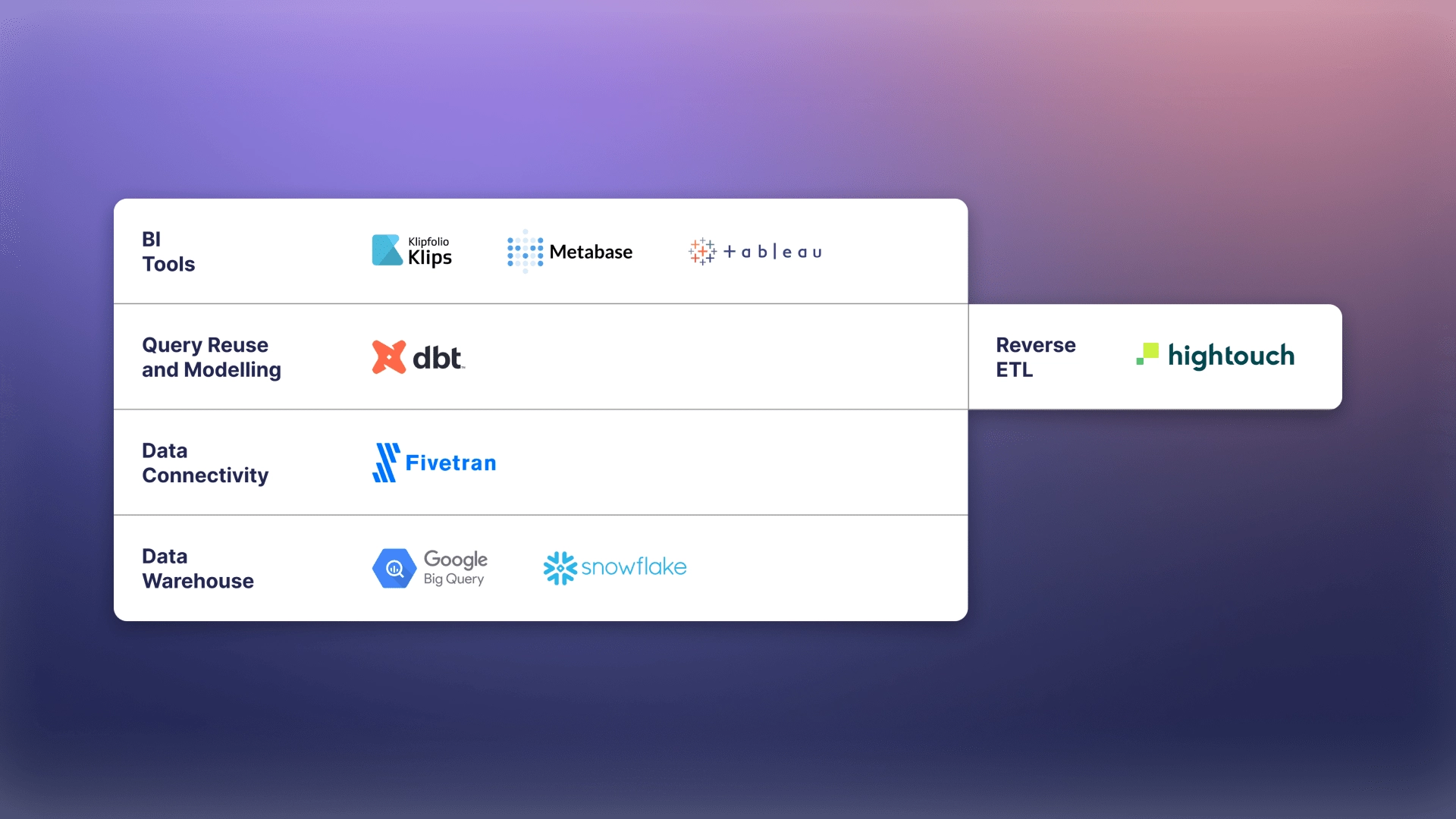
Over the following years, data teams shifted focus to cleaning and verifying data — making it consistent and trustworthy for both applications and business users. dbt (data build tool) became central to this work. Data analysts and engineers use dbt to transform and model data on top of the warehouse, compiling code into SQL and running it against structured data. Reverse ETL tools like Hightouch completed the loop by pushing clean data back into the applications that consume it — CRMs, product analytics platforms, and financial tools.
Metric-centric BI
Clean data sets are necessary, but not sufficient. When business teams consume the same clean data and still reach different conclusions, the problem isn't the data — it's the lack of shared metric definitions. That inconsistency is the drivers behind the development of our second product, PowerMetrics.
PowerMetrics adds the components most teams are missing from their modern data stack:
- A metrics layer that adds business meaning to raw data
- A metric data catalog so everyone knows which metrics they're tracking and why
- Purpose-built metric visualization so every team can explore, visualize, and share data without relying on a data team


The metrics layer
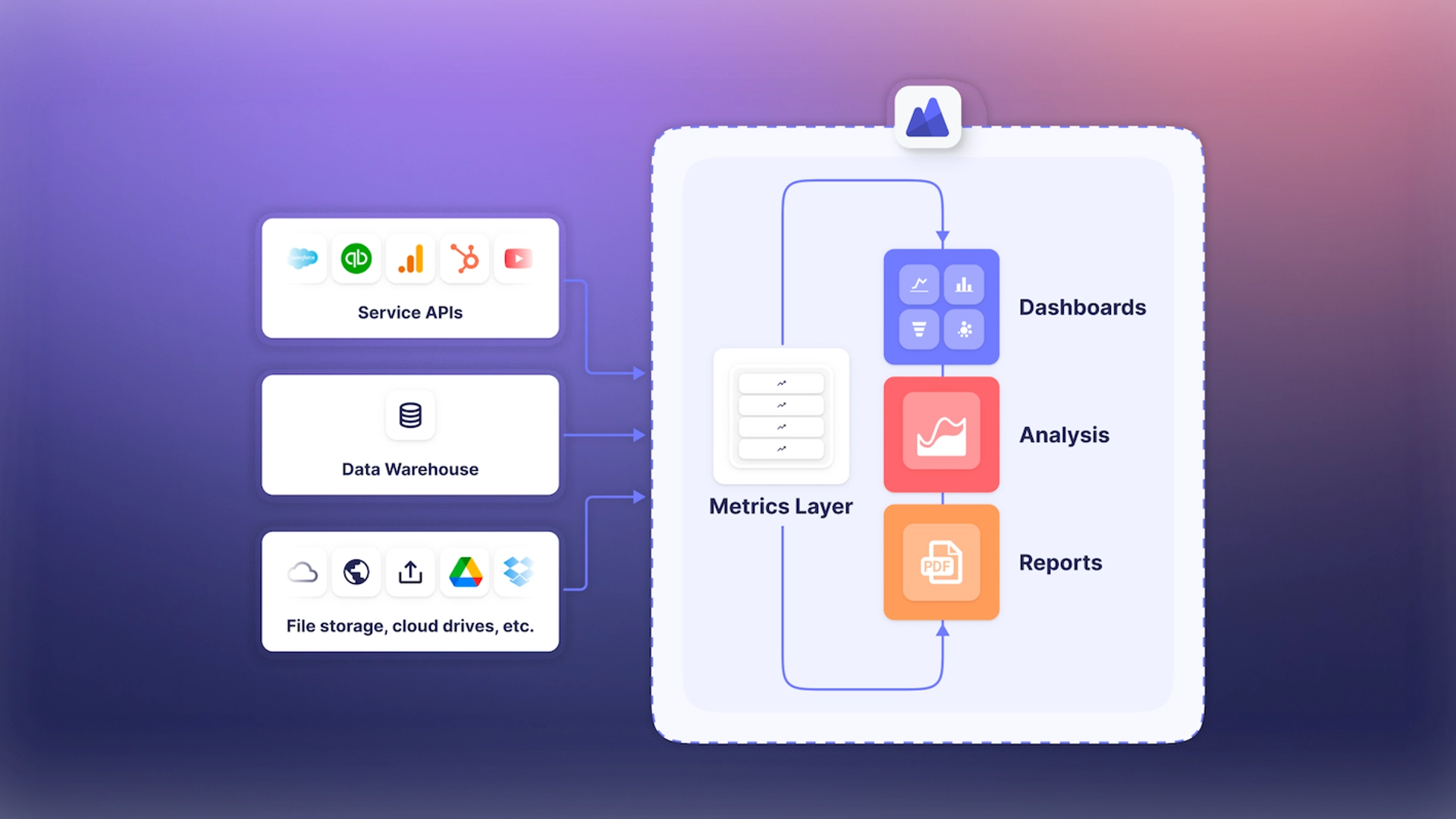
The metrics layer (aka the semantic layer) is where raw data becomes business-ready. It starts with standardized data definitions — adding semantic meaning and metadata so every team draws from the same source and reaches consistent conclusions.
Better data understanding doesn't come from more data — it comes from the right data. Time series data is central to this. Including a date/time field means you retrieve exactly the data you need, with no unnecessary overhead. It also enables accurate real-time and historical visualization, filtering, and trend tracking. Historical data can always be backfilled asynchronously.
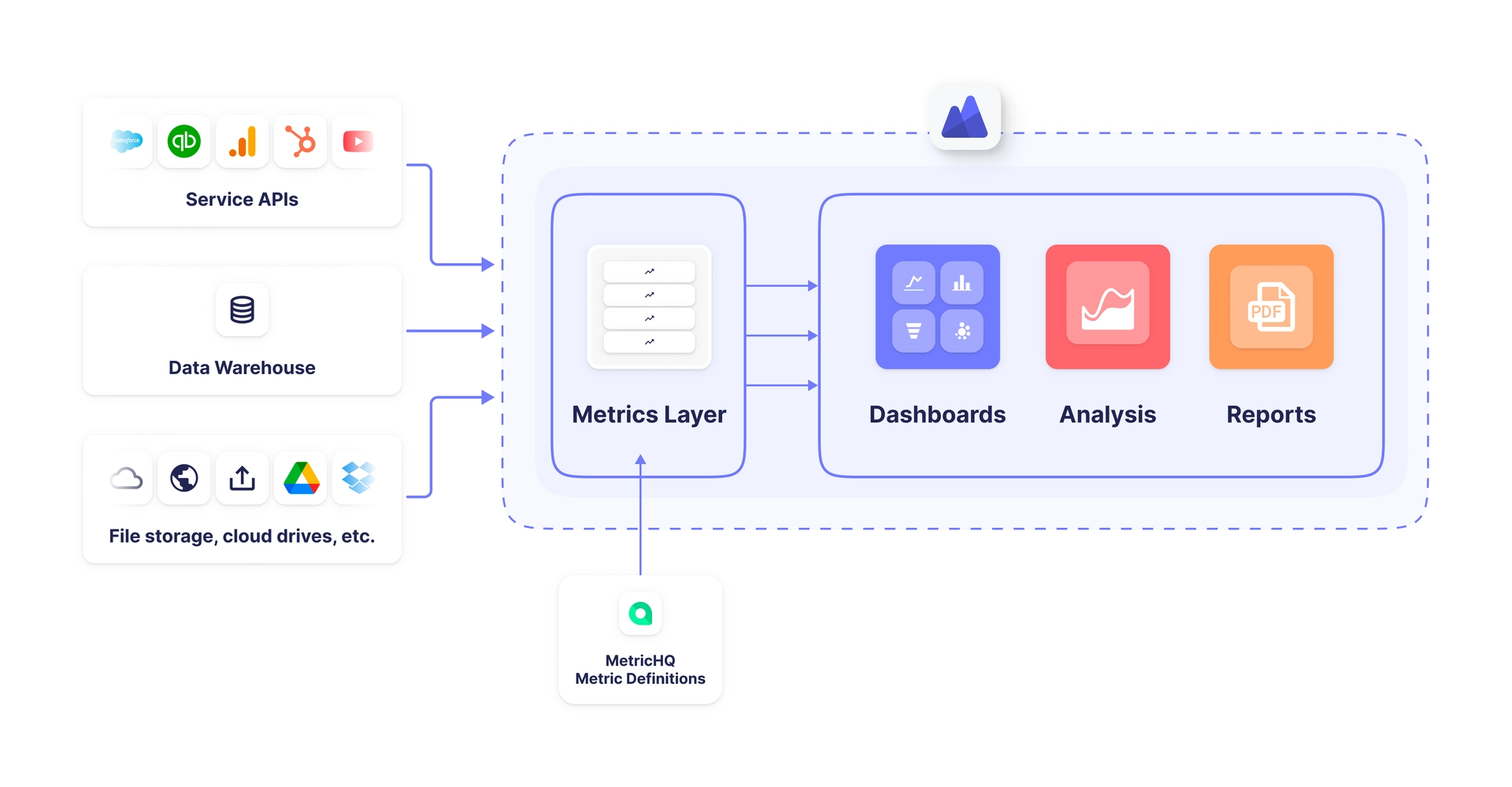
Data feeds separate the data powering a metric from the metric's definition. This means PowerMetrics can pull exactly the data needed for a specific metric from any source — a data warehouse, or a source application like Google Analytics 4, HubSpot, Salesforce, or Shopify. That flexibility is a meaningful advantage over tools like the dbt Semantic Layer, which only supports data warehouses. Joins, unpivots, functions, and formula-based transformations all happen at the data feed level.
The data feed design also enables metric governance. Anyone can explore the data without needing access to the underlying SQL query or raw data. Data teams focus on creating clean data; business users define and visualize metrics from it using a visual query builder — no SQL required.
PowerMetrics also maintains a knowledge graph that defines and stores the relationships between metrics. This structured representation combines information and metadata from multiple sources, enabling powerful exploration, discovery, and analysis across domains. Over time, the knowledge graph will support automated recommendations for related metrics and deeper insights.
The final piece of an effective metrics layer is dynamic data segmentation. Analyzing data from multiple perspectives is essential for understanding business performance — similar to an OLAP (online analytical processing) cube, but created automatically and seamlessly.
In PowerMetrics, all of these metrics layer components are unified into a single object: a metric.
Metric Catalog
PowerMetrics launched in open beta in February 2019. From the start, the Metric Catalog has been one of its most important features. It gives users a single view of every metric they have access to — current value, change over time, trend, and last refresh date. A powerful search function reduces duplicate definitions and helps teams build a trusted, company-wide metric set.
We also recognized that most teams don't know what to measure, how specific data sources represent data, or which industry-accepted formulas apply. In September 2019, we launched MetricHQ to advance data literacy and give teams a verified starting point. Hundreds of metric definitions are now available in the library, each reviewed and confirmed by industry experts.
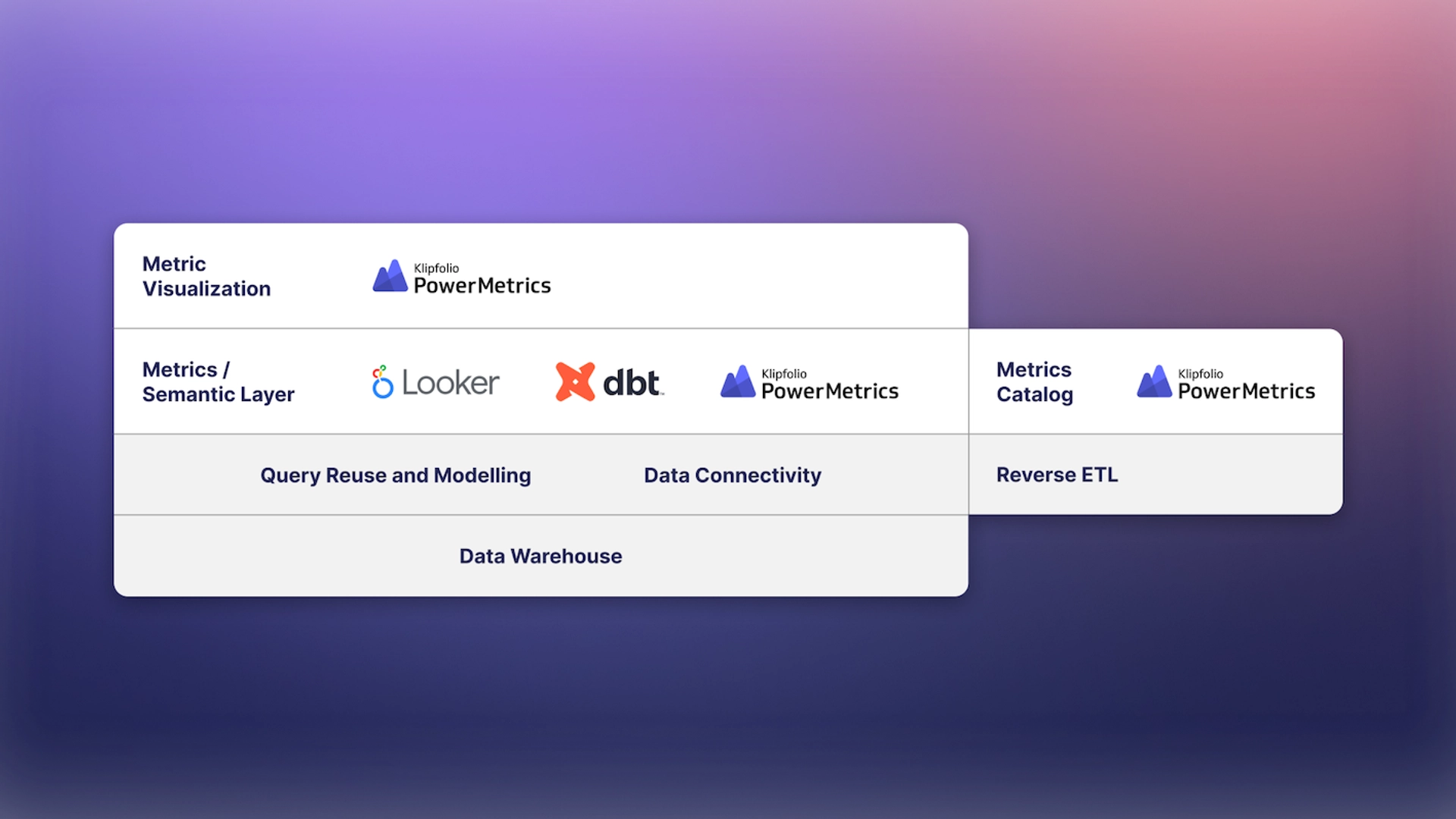
Tools like dbt Semantic Layer and Looker Modeller have emerged as useful first steps toward a universal metrics layer — allowing metric definitions to be created on top of modelled data. But expecting data teams to build and maintain every metric for every business unit isn't realistic. The process of capturing requirements, building definitions, and keeping them current is time-consuming and difficult to scale. And once the metrics exist, business users can't easily verify them — they're not SQL experts, and they don't use dbt.
Metric visualization
Seeing the data is the fastest way to confirm a metric definition is correct — faster than SQL debugging, and accessible to everyone. PowerMetrics includes a library of dashboard templates, built-in chart types that update with a single click, data exploration tools, goals and notifications, and filters for tracking metric data in real time or across history. Dashboards are quick to assemble and easy to share with anyone inside or outside the organization using the published view capability.
Completing the modern data stack
A metrics layer, a catalog of verified metric definitions, and purpose-built visualization capability — together, these complete the modern data stack. Each component on its own only solves part of the problem for part of the audience. PowerMetrics has included all three from the beginning.
The metric-centric approach is how teams stop arguing about numbers and start making decisions with confidence. PowerMetrics is built for exactly that — and we're continuing to evolve the platform to serve data teams and business teams alike.
Ready to see it in action? Try PowerMetrics free — no credit card required.