
Metrics are the building blocks of AI & BI



Summary: Metrics are the foundation of modern business intelligence. They solve the central tension in analytics: how to give decision makers fast access to trustworthy data without overwhelming data teams. This guide explores how metrics transform data from a bottleneck into a strategic asset, why they outperform traditional BI models, and how to implement a metrics-centric approach in your organisation.
Metrics are the foundation of modern business intelligence. They bridge the gap between data teams and decision makers, enabling organisations to move beyond spreadsheet chaos toward consistent, trustworthy, self-serve analytics. In this guide, we'll explore how metrics transform data from a bottleneck into a strategic asset—and why they're essential for any growing business.
From Excel chaos to verifiable intelligence
Every business starts somewhere. Often, that journey begins with enthusiasm, a spreadsheet, and manual data entry.
The spreadsheet phase
Imagine two entrepreneurs launching a sports equipment startup. They're tracking everything in Excel—manually copying data from Google Analytics, payment processors, and advertising platforms. It works, but it's labour-intensive and fragile. One misplaced formula, and the numbers change across the entire business.
Growth brings complexity
As the company scales, they hire a Chief Marketing Officer who recognises the need for structure. She pushes for dashboards and reporting tools to replace Excel. Some reports pull from the spreadsheet; others connect directly to their CRM and ad platforms. Now there are multiple versions of truth, and no one is certain which numbers are correct.
The data team arrives—and defines metrics
Eventually, the company reaches a point where one person can't manage data requests alone. They hire a small data team with a clear mission: distribute trustworthy, self-serve data that empowers confident decision-making.
The team's approach is straightforward. They define metrics—single, well-described business measures—and store them in a central catalog. They certify which metrics are approved, set access controls by role, and govern who can use what. Suddenly, stakeholders have access to a single source of truth. Decisions become faster. The data team stops being a bottleneck and starts being a strategic partner.
The great divide: Data experts versus decision makers
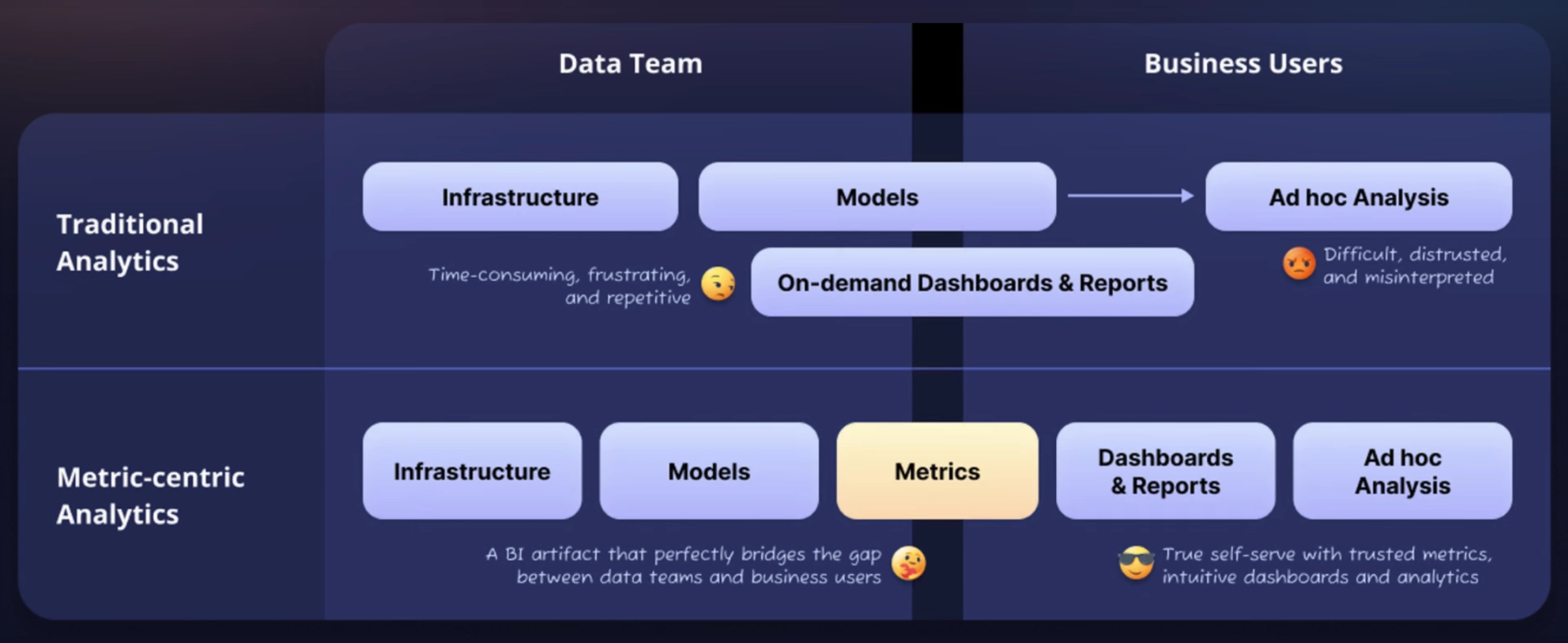
As organisations grow, two distinct groups emerge around data:
- Data Experts (Data Team): These professionals handle the technical side—sourcing data, architecting systems, managing access, and ensuring data quality.
- Decision Makers (Business Users): These individuals rely on data to make informed choices. They need answers, not tools.
The challenges of traditional BI
Traditional BI tools place the burden on data teams to create and maintain dashboards and reports. This creates two problems:
- Data Team Overload: When data professionals spend their time responding to ad-hoc report requests, they're diverted from strategic work—data architecture, quality, and governance. Efficiency suffers, and backlogs grow.
- Decision-Making Delays: Business users wait for data teams to deliver reports. This bottleneck slows decisions at critical moments, eroding the competitive advantage that timely insights provide.
Metrics: A new approach
A metrics-centric approach flips the model. Instead of building reports, data teams define and govern metrics. Business users then access those metrics independently—in dashboards, AI chat, or embedded in their workflow.
The result: data teams focus on what they do best (managing data quality and consistency), and business users get self-serve access to trusted answers.
Essential terminology
Before we dive deeper, let's clarify three related concepts:
Key Performance Indicators (KPIs)
KPIs are measures of business health and success. They track what matters most—revenue, customer acquisition cost, churn rate, or employee retention. KPIs are typically monitored in dashboards and reports.
Objectives and Key Results (OKRs)
OKRs are goals set for a specific period, based on KPIs. If revenue is a KPI, the OKR might be to increase revenue by 20% by the end of the quarter. OKRs provide direction; KPIs measure progress.
Metrics
Metrics are queryable data artefacts that measure one thing consistently. They track KPIs and support OKRs. A metric has a single, well-defined business meaning—"Total Revenue" is different from "Average Revenue per Customer," even though both use the same underlying data. Metrics can also be secondary or supporting measures that aren't directly tied to KPIs but provide valuable context.
Why metrics outperform traditional BI models
A metric is a data model with a single, unambiguous business definition written in language everyone understands. It measures one thing. You can have many metrics, but each one has its own unique meaning.
Traditional BI ties meaning to data through presentation logic—dashboards and reports. If you change the dashboard, the meaning shifts. Metrics flip this: they tie meaning directly to the data itself, independent of how it's visualised or used.
Metrics are also composable. You can combine them using formulas to create richer metrics. And unlike traditional BI, metrics don't enforce a specific presentation. They expose query capabilities (filter by month, region, or product) without altering their core meaning. A "Total Sales" metric always means the same thing, whether you're viewing it as a chart, a table, or embedded in an AI response.
What makes up a metric
A metric consists of four key components:
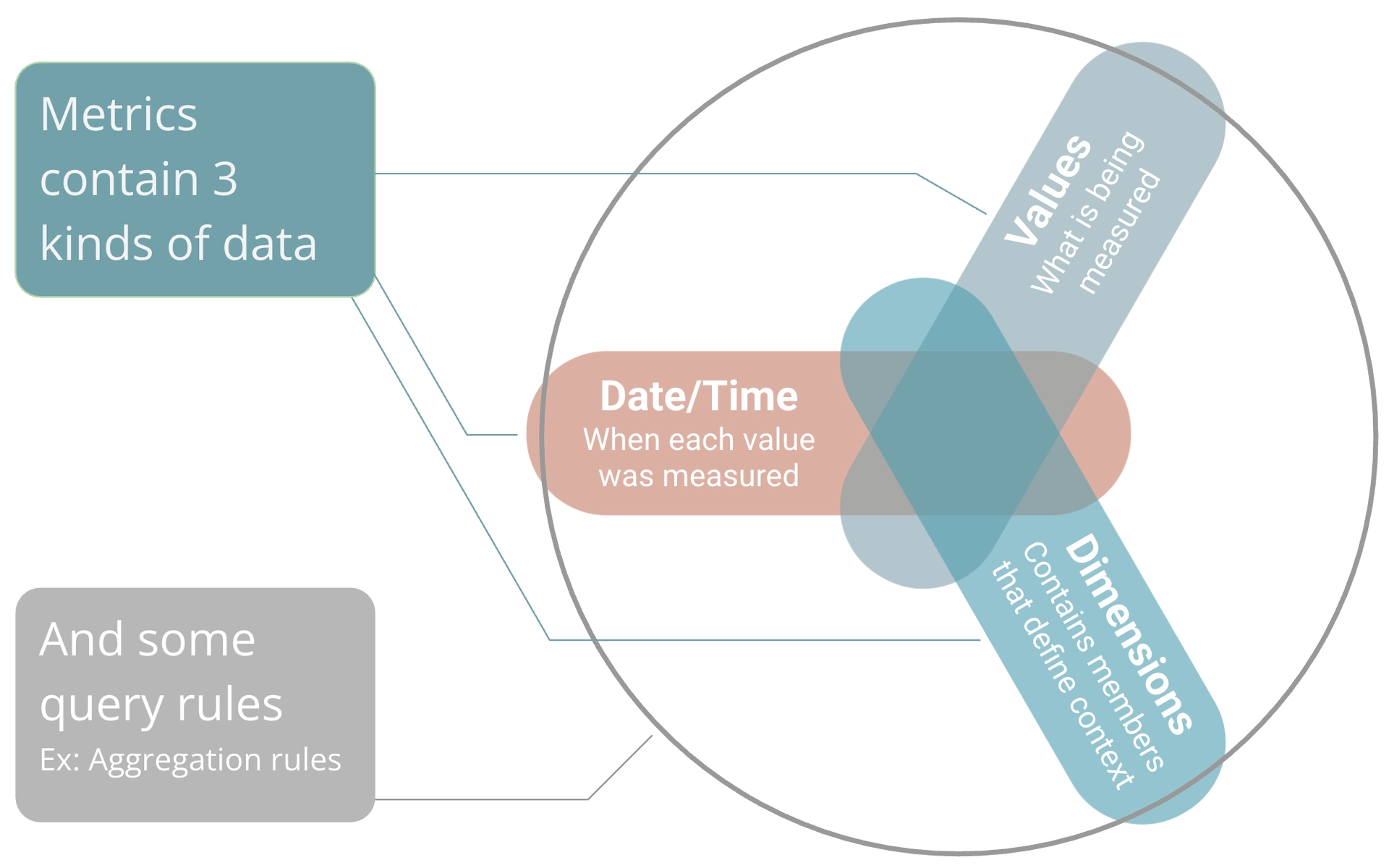
- Values: The quantities being measured—revenue, profit, conversion rate, or customer count. Each metric tracks a single value.
- Timestamp: A date or time indicating when the value was recorded or what period it represents. Values and timestamps together define the core meaning of the metric.
- Dimensions: Additional context that allows data to be segmented for analysis. Common dimensions include region, product, customer segment, or sales channel.
- Query rules and configurations: The logic behind how the metric is calculated and queried. These rules are set by the metric's creator and remain hidden from end users, ensuring consistency.
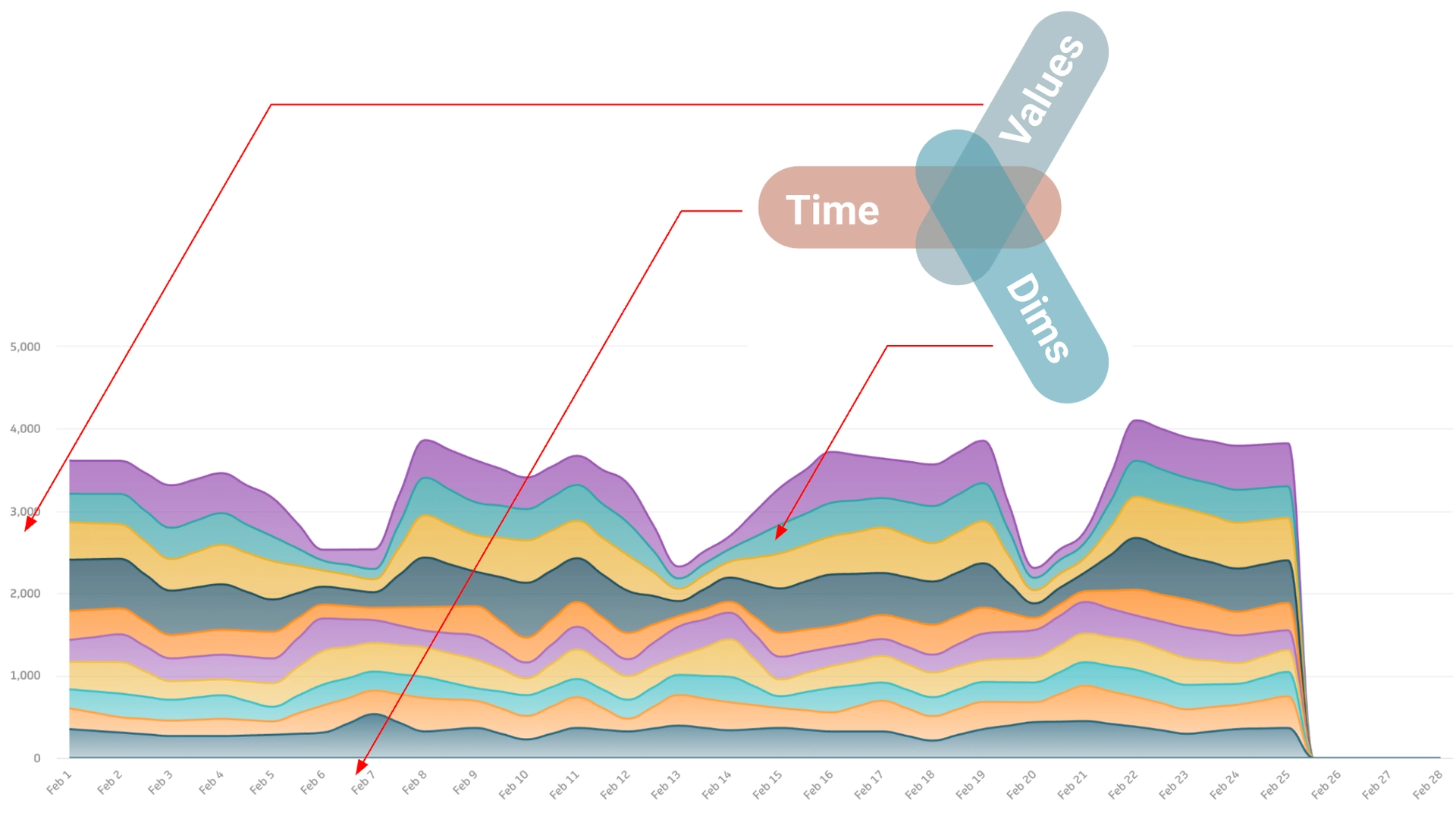
Here's how these components map to a visualisation: values become data points, timestamps create the time axis, and dimensions enable segmentation.
Technologies that enable metrics
Several modern technologies support metric creation and management:
Metric platforms
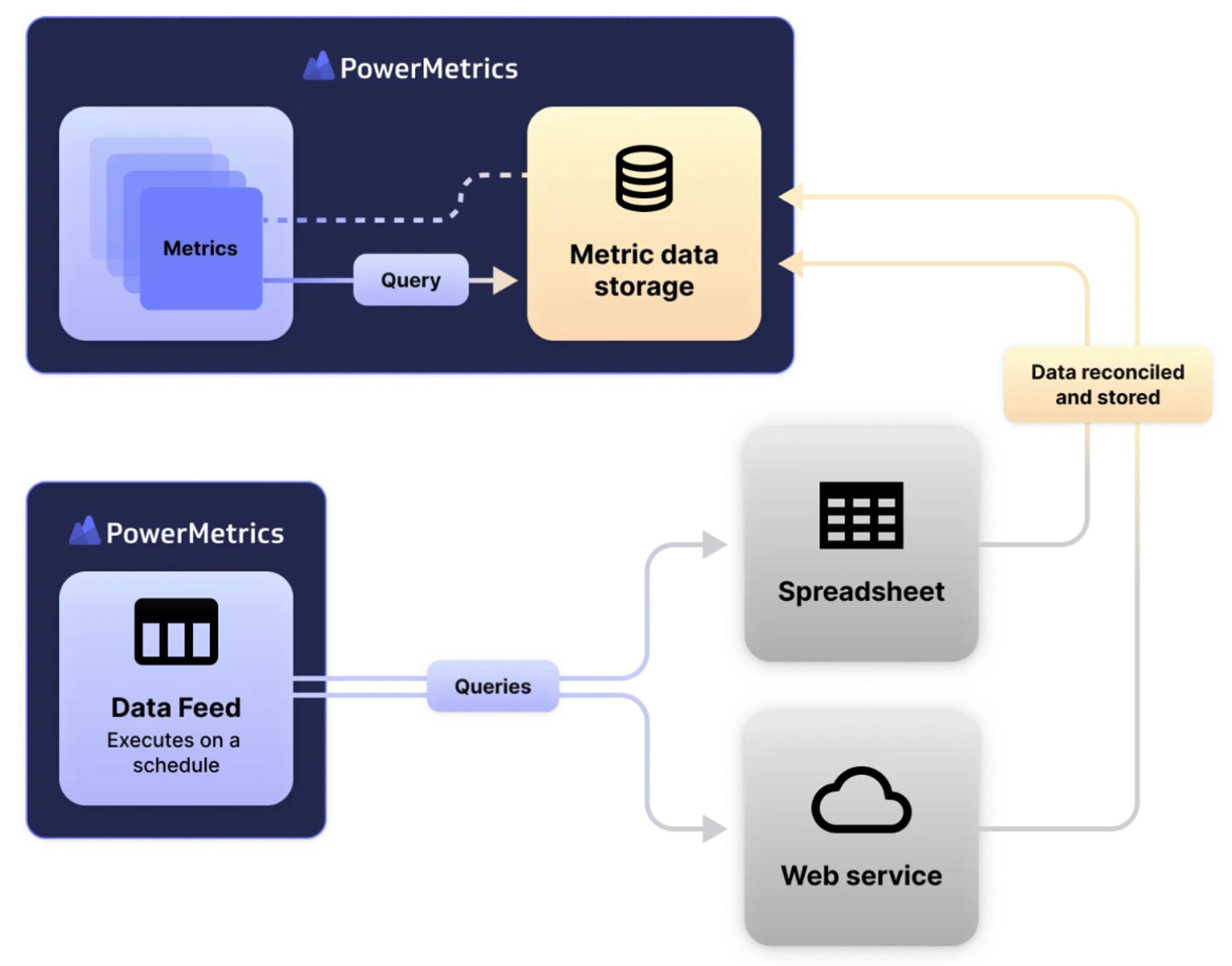
Metric platforms are SaaS solutions designed specifically for metric storage, querying, and governance. They include metric definitions, metadata, and descriptions. They collect and maintain historical data through regular refreshes, which is especially valuable when pulling from APIs (Google Analytics, Stripe, QuickBooks) where historical data isn't readily available.
Metric platforms are also ideal for spreadsheet-based data. Businesses transitioning from Excel can continue their existing update processes and import the results into the platform, building metric history over time.


SQL metrics and data warehouse metrics
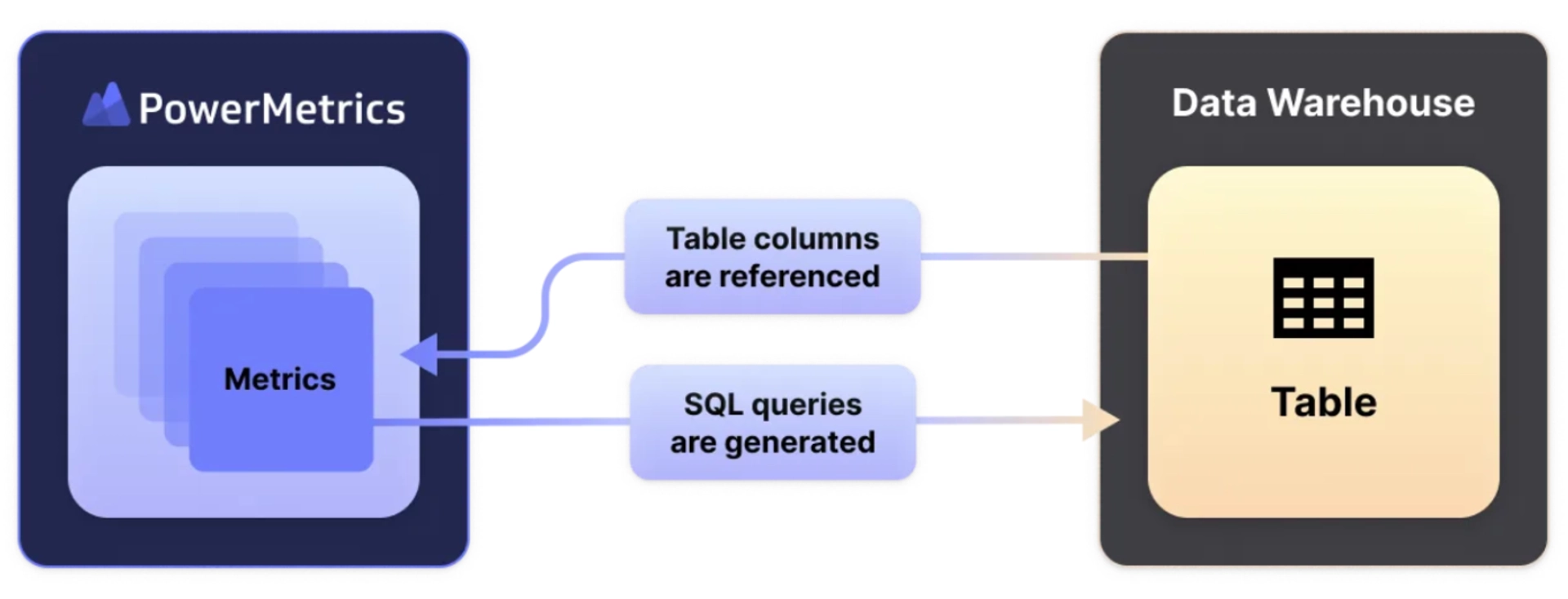
Many organisations prefer to keep data in their existing data warehouse (Snowflake, BigQuery, Databricks) and connect metrics directly. This approach requires some modelling within the warehouse—preparing tables or views for metric connection—but the data remains where it lives. Once configured, metrics translate user queries into SQL against those warehouse tables.
Semantic layers
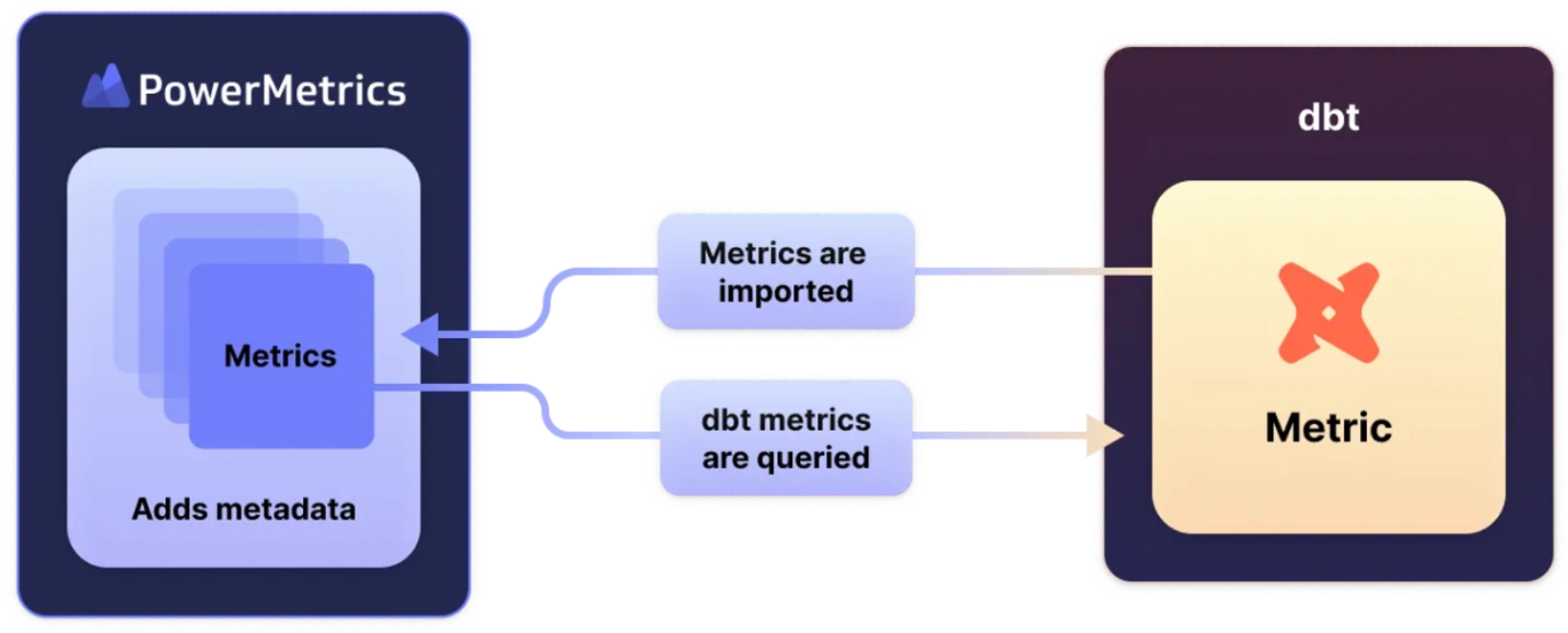
Semantic layers like dbt Semantic Layer and Cube add a metadata layer on top of data warehouses. They enable rich modelling and support advanced use cases. Connecting a metric to a semantic layer involves pointing to the fields the metric system needs to understand how to query them. Some semantic layers include built-in metrics.
Why metrics matter
Metrics solve a decades-old problem in business intelligence: how to give everyone access to trusted data without creating bottlenecks. Here's why they're essential:
Metrics are universal
No matter what systems or data sources you use, metrics function consistently. You can redefine a metric from one type to another (say, from a spreadsheet to a data warehouse) with zero impact on downstream users or dashboards.
Metrics can be combined with formulas
Metrics are composable. You can combine existing metrics using formulas to create new, richer metrics. The formula operands are other metrics—even other calculated metrics.
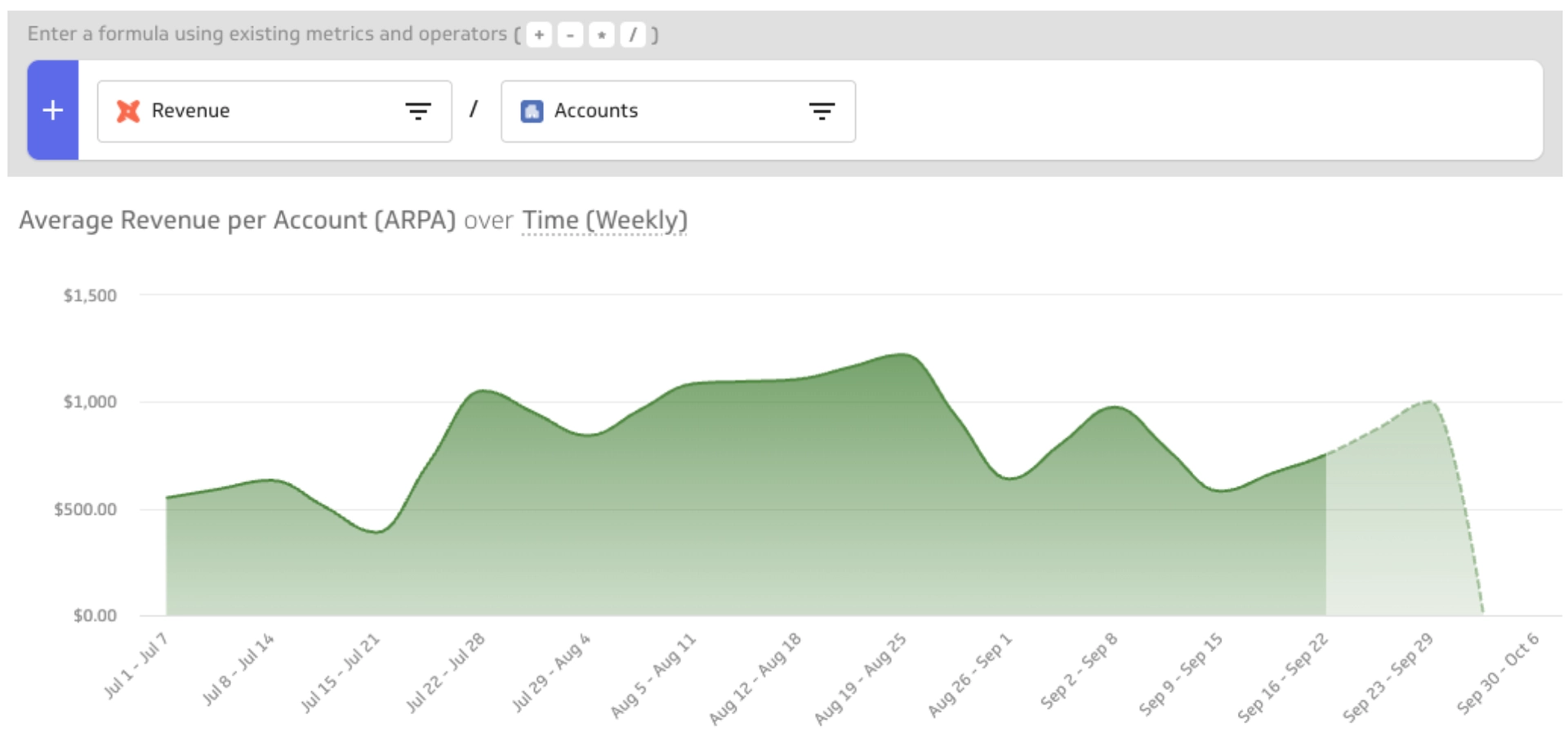
The system queries the underlying metrics, joins the aggregated results, and applies the formula. The new metric behaves exactly like any other metric—it follows the same rules, is queried the same way, and can be used to create additional combined metrics.
Metrics combine in visualisations
Metrics are singular in meaning, but visualisations don't have to be. You can combine multiple metrics in a single chart by joining them on a shared context (like time or region).
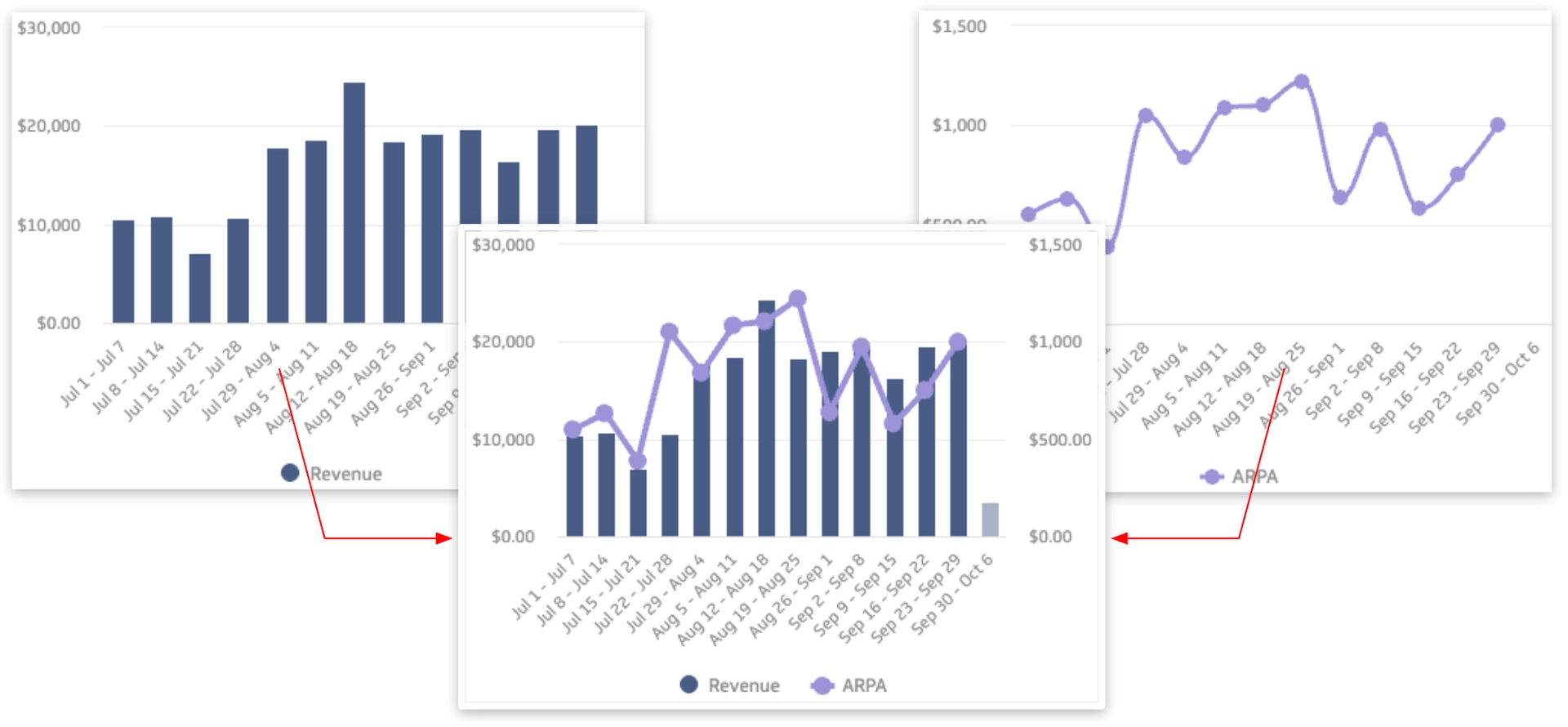
This composability—building with metric blocks like Lego—lets end users create rich, complex visualisations without touching underlying data. Perfect for self-serve dashboards and reports.
Metrics enable a single source of truth
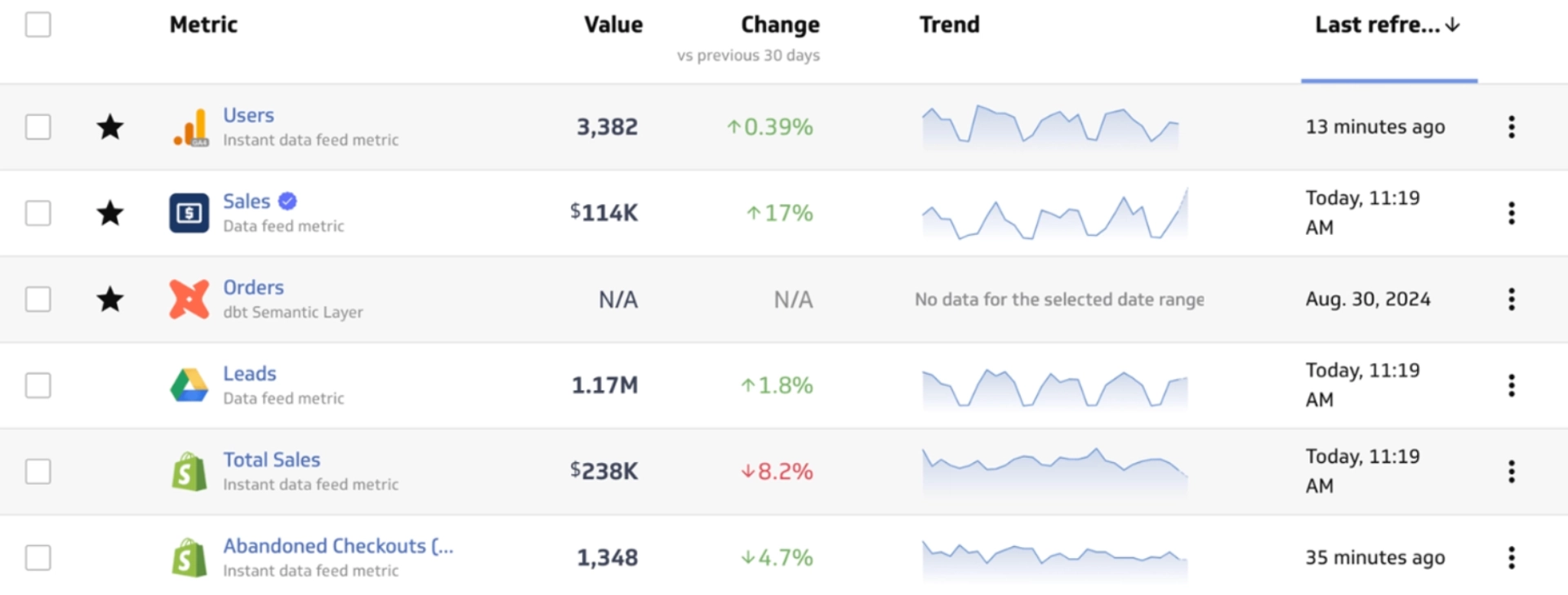
Trustworthy data is the foundation of confident decisions. A centralised metric catalog—managed and certified by the data team, governed by roles and permissions—ensures everyone accesses the same definitions. The catalog becomes both an access point and a library where users can track metric progress and gauge overall business health.
Metrics simplify visualisation and reporting
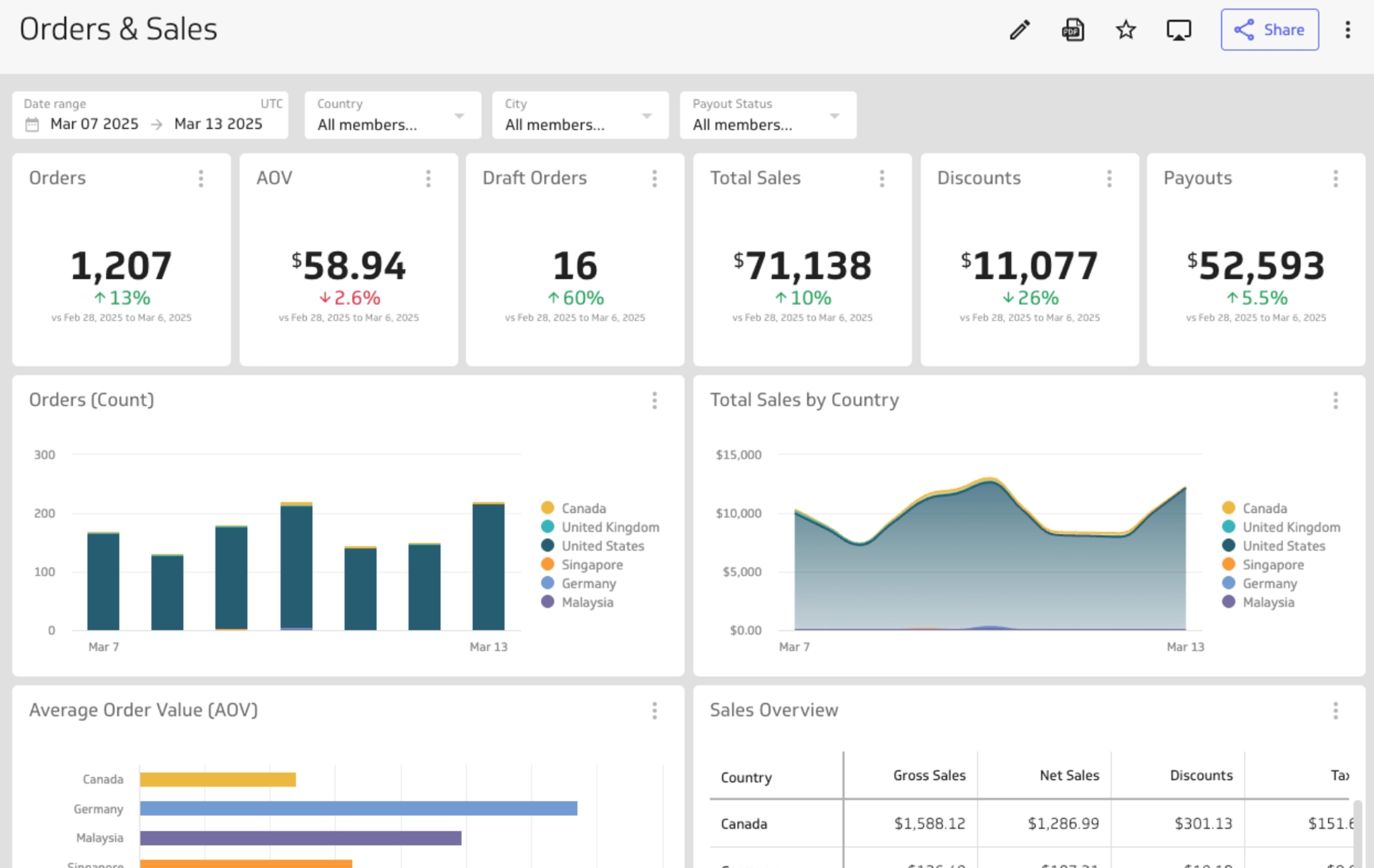
Because metric meanings are locked in, users trust the data they're working with. Even those without deep knowledge of data architecture can confidently create visualisations, dashboards, and reports. Metrics inspire confidence.
Metrics support advanced analytics
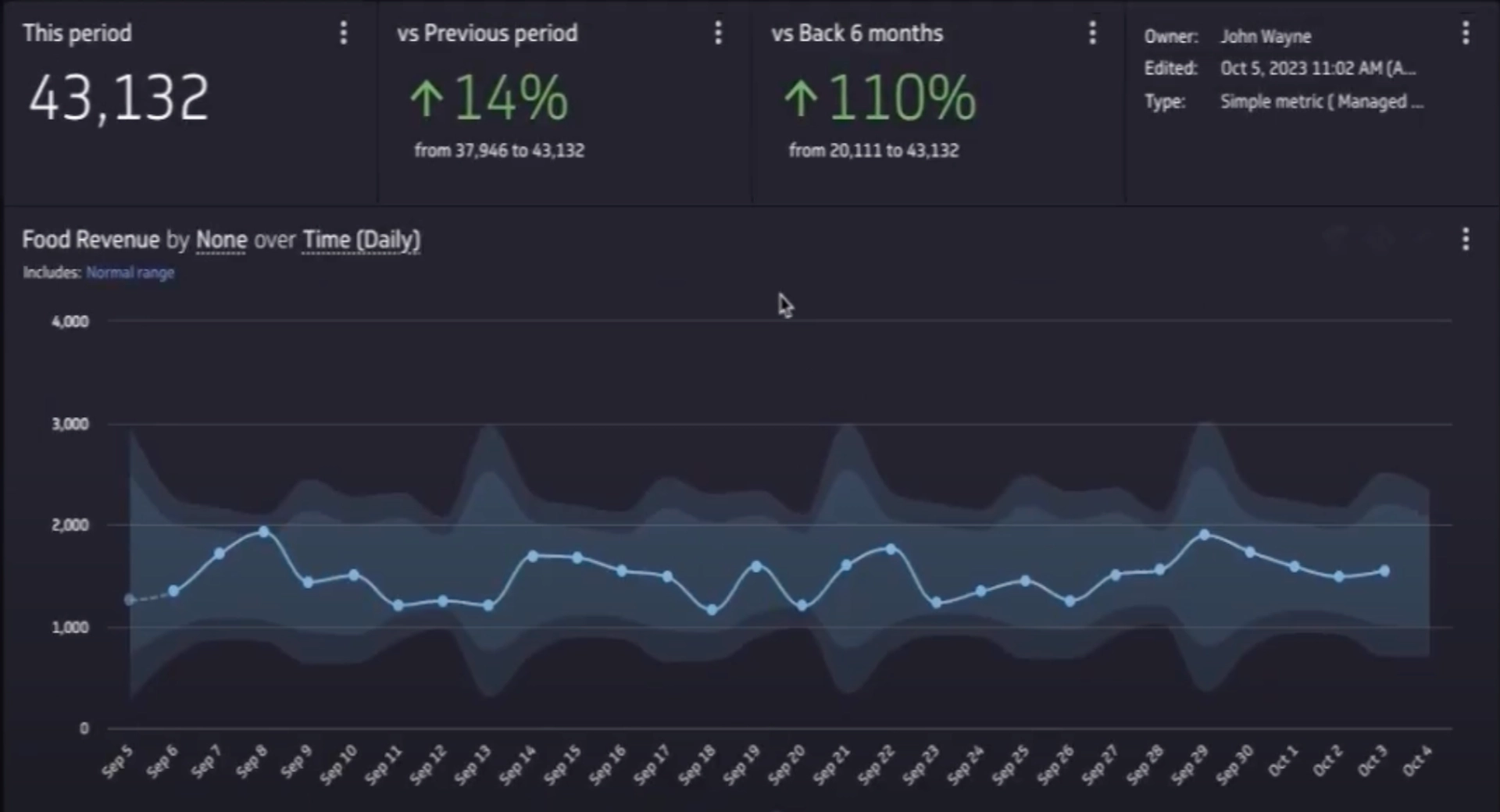
The structured nature of metrics enables sophisticated analysis. Time series analysis, for example, requires a consistent time axis with specific granularity. Metrics have a natural time structure and consistent query language, making advanced analysis straightforward.
Metrics are queryable and easy to integrate
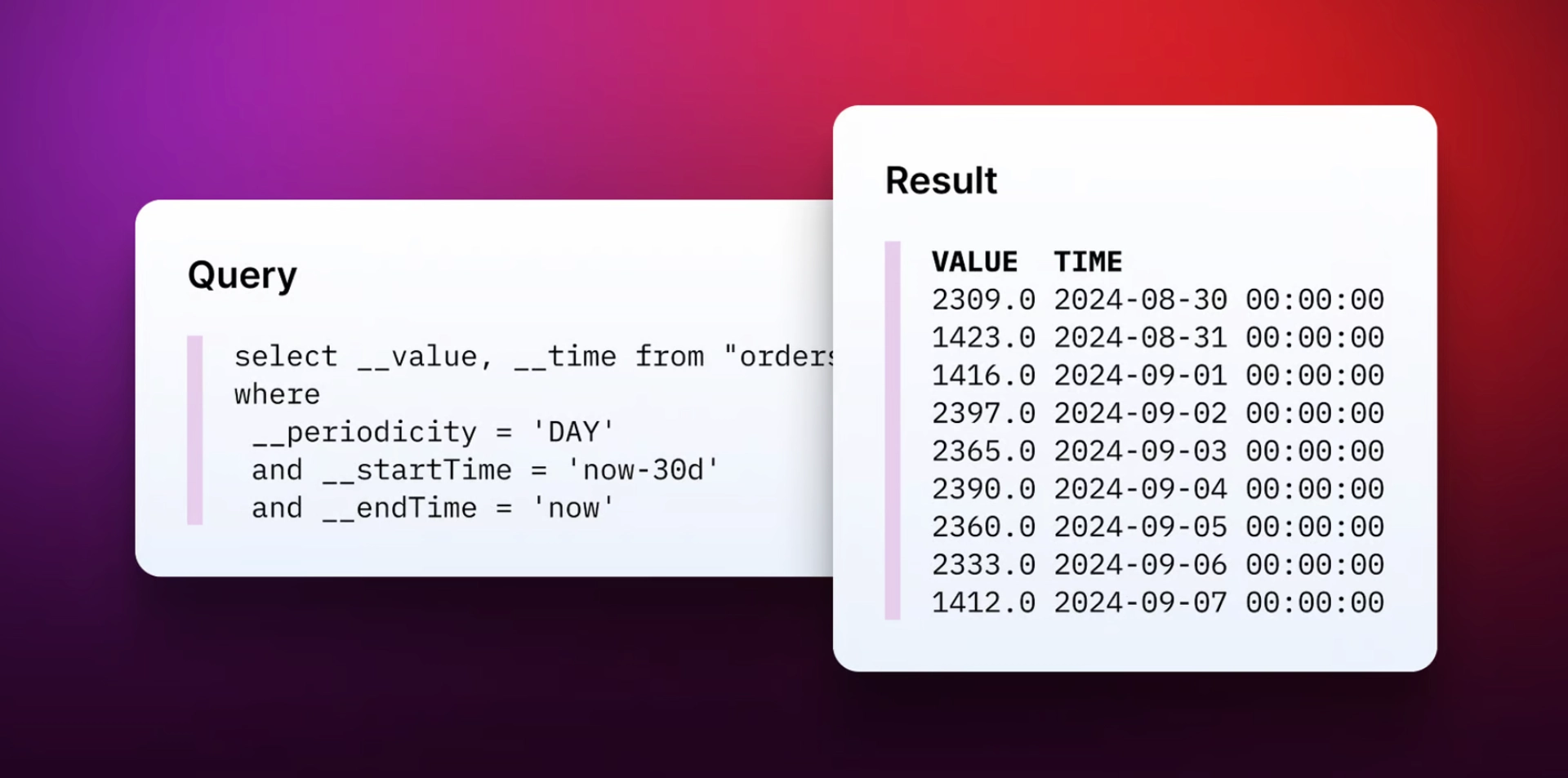
Metrics can be queried like any other data. Most metric systems include their own query language and often support a subset of SQL. This makes it easy to integrate metrics into other systems using JDBC drivers, much like querying a traditional database.
Getting started with metrics
Ready to implement a metrics-centric approach? Follow these five steps:
1. Collaboratively perform a needs analysis
Bring data teams and decision makers together to identify OKRs and KPIs. Audit your existing data to confirm you have what you need. Prioritise KPIs and OKRs together. This collaborative foundation ensures the data team understands what matters and how to deliver it efficiently.
2. Implement the required data architecture
With a KPI roadmap in place, the data team builds the data architecture to support it. This is critical—a solid foundation ensures reliable metrics and sustainable governance.
3. Define key metrics
Following the roadmap, the data team defines metrics in priority order. Each metric is written in clear business language with consistent naming and descriptions. Include calculations and data sources so everyone understands where the data comes from.
4. Set up access controls for self-serve analysis
Maintain single-source-of-truth data by establishing roles and permissions. End users can then self-serve certified, approved metrics from the central catalog for analysis, reports, and dashboards.
5. Establish a feedback and improvement loop
Metrics evolve as the business does. Create an internal process where metric changes—additions, updates, or removals—can be requested and prioritised.
Metrics: The foundation of modern self-serve analytics
Metrics solve the central tension in analytics: how to give decision makers fast access to trustworthy data without overwhelming data teams. With a consistent yet flexible structure, metrics provide safe, familiar access to certified data while enabling advanced analysis. Meticulously defined, centrally managed, and governed, metrics create a vital bridge between data teams and decision makers—ensuring everyone has the right data at the right time for confident, informed decisions.